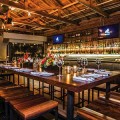
On Saturday, Ryan Agamie Melchiano and Ryan Hisamune, seasoned San Francisco restaurateurs, unveiled their finished product, SP2, in San Pedro Square.
Two years were spent renovating the 100-year-old building for SP2, once home to Sabor, and originally used as a horse stable. Large walls were demolished to provide viewing into the San Pedro Square’s market. The area is expansive, with over 6,000 square feet inside and a gorgeous 3,500 square foot patio.
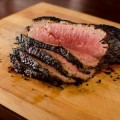
Melchiano and Hisamune opened over a dozen restaurants in San Francisco before setting their sights on the evolving scene of downtown San Jose. SP2 – short for San Pedro Squared, Silicon Valley-tech humor – is their original concept. Vibrant cocktails, bistro victuals and large, communal tables offer a tasteful and intimate dining experience.
San Jose’s evening crowd easily welcomed SP2 to the downtown neighborhood on Saturday. The grand opening was well attended, as crowds scoped the new grounds and enjoyed the summer night on the patio. The outdoor grill served up plates of Asian-style ribs, sliders, and bacon-wrapped hotdogs. And around 9:30pm, Chinese lion dancers made a guest appearance, delighting the audience with their syncopated, trance-like movements.
Now that the doors are fully open, SP2 is ready to distinguish itself and its brand. SP2 is open 7 days a week, with a brunch menu on Saturday and Sunday. The patio is newly finished and equipped with a grill and outdoor bar. And in two weeks, SP2 will be rolling out a lunch menu. Stay tuned.
 Strawberry Fields is South San Jose’s Newest Bakery
  Snow Park Coming to San Jose?