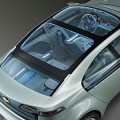
Driving cars has gotten a lot easier thanks to Google Maps, and now thank to the Google steering wheel and the Google gas pedal too. The search engine megasite just announced that it has been testing its new robot car, which drives, parks, and gets around traffic without the pesky interference of a driver. They’ve put the “auto” back in automobile, using GPS, video cameras, radar, and computers for a smooth driving experience, on highways and around town.
It’s not just a theoretical product either. Google’s self-driving cars have already covered 140,000 miles in test runs so far, with only very minimal human intervention. It has even covered 1,000 miles without any intervention at all. In all that time, there was only one accident. The car got rear-ended at a traffic stop by a human driver. The robot car itself drove cautiously—though Google also says that it can be programmed to reflect the personality of the human occupants of the “non-driver’s seat,” whether it’s overly cautious or a tad aggressive.
What are the advantages of the robot car? For one, robots are not distracted by external stimuli, whether it is a cell phone, the aftereffects of an office holiday party, or more sluggish responses due to old age. They react more quickly, and, with the proper cameras and radar, have no blind spots. In other words, the robot cars have eliminated all of the major causes of traffic accidents. This, in turn, means that they can be built lighter—there is no need for a massive steel contraption to compete for highway space—and in turn, use less energy to move the car along. And they can drive more closely to other cars, meaning that highways will have more space. In fact, Google engineers estimate that the self-driving Google cars could double the capacity of our existing roads. Traffic jams could be a thing of the past.
There are, however, some legal issues that must be resolved first, in a classic case of the law falling far behind technology. If an accident does occur, who is ultimately responsible: the non-driver, or Google itself because of a flaw in the operating system? Bernard Lu, Senior Staff Counsel for the California Department of Motor Vehicles, says that the cars should be considered legal because the occupants still have the possibility of overriding the system. From a legal perspective, the non-driver is actually the driver.
The practical introduction of the new vehicle on the road is still several years away, with the earliest estimate given as about 2020. What is not yet certain is whether Google will start competing against the traditional automakers and produce its own vehicles, or whether it will simply provide the technology to car manufacturers. Sebastian Thrum, the brains behind the new car, has said that to the best of his knowledge, Google has not yet developed a business plan for the new vehicle.
There are other considerations too. In the SFGate, Henry Blodget questioned the wisdom of Google building a Google car. He writes that while Google can certainly do what it wants, it may be spreading itself too thin, with its new focus on alternative energy, the Shweeb, and now cars. He suggests instead that Larry Page, rumored to be a major backer of the initiative, take some money, find some investors, and spin off a separate start-up to focus on the new cars. This, he argues, will benefit Silicon Valley in general and the engineers behind the car themselves, who would otherwise get lost in the megalith that is Google. It would also allow Google to focus on what it does best—refining search and creating new aps. This, he believes, is a “better way to innovate. Better for engineers and innovators. Better for executives. Better for consumers. Better for economies. And better for innovation.”
Regardless of what Google decides to do, there is no doubt that the new Google car could redefine driving as we know it by making it faster, safer, cleaner, and easier.
Read More at CBS.
Read More at NBC Bay Area.
Read More at the New York Times.
 To-Do List: Oct. 11-15